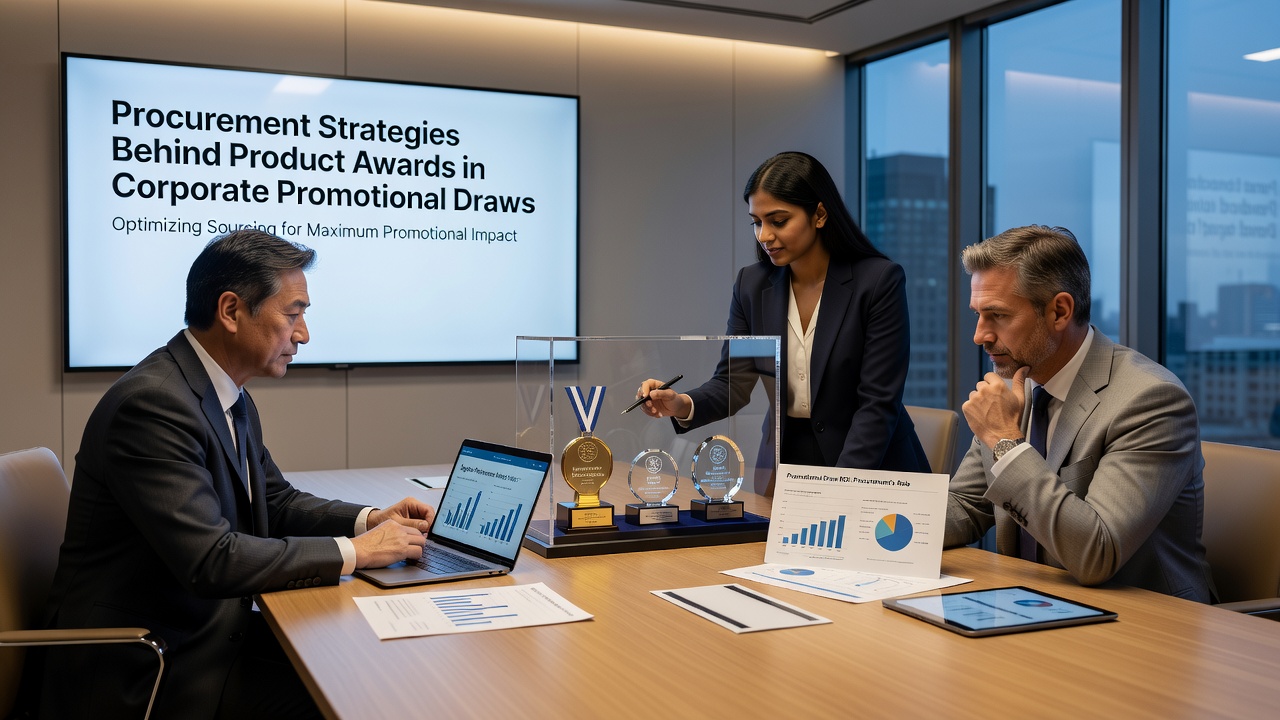
Procurement Strategies Behind Product Awards in Corporate Promotional Draws
Corporate promotional draws rely on carefully sourced product awards that match campaign budgets, brand alignment, and regulatory requirements, and procurement teams handle the upstream work of identifying suppliers, negotiating terms, and managing delivery timelines that keep contests running smoothly. Data from industry reports shows that companies often allocate between 15 and 30 percent of total promotion budgets to prize acquisition, with decisions shaped by volume commitments, seasonal demand forecasts, and supplier reliability metrics tracked over multiple campaigns.
Core Sourcing Channels Used by Procurement Teams
Procurement specialists typically draw from three main channels when assembling prize inventories, starting with direct manufacturer relationships that deliver bulk pricing and customization options, moving through authorized wholesalers that provide faster turnaround on mid-tier items, and incorporating occasional strategic partnerships where brands exchange products rather than cash. Research from the Promotional Products Association International indicates that direct manufacturer contracts account for the largest share of high-value electronics and appliances awarded in national draws, while wholesalers handle the majority of apparel and accessory prizes that require quicker replenishment cycles.
Those managing these channels track supplier performance through key metrics such as on-time delivery rates above 95 percent and defect rates below 2 percent, because any shortfall directly affects draw execution dates. In August 2026, several major consumer goods firms adjusted their sourcing calendars to secure inventory ahead of holiday season promotions, locking in pricing six months earlier than in previous years due to documented fluctuations in raw material costs.
Volume-Based Negotiation and Contract Structures
Negotiations center on tiered pricing models where larger committed quantities unlock deeper discounts, often structured as multi-year agreements that include clauses for price adjustments tied to commodity indexes. Procurement documents reviewed across multiple campaigns reveal that companies secure 10 to 25 percent savings when they guarantee minimum annual purchase volumes, and these savings are frequently reinvested into additional prize tiers that increase overall draw participation rates.
Contract language routinely incorporates provisions for returns, substitutions, and expedited shipping at no extra cost when inventory shortages occur near draw dates. Observers note that firms maintaining centralized procurement databases can cross-reference past supplier performance across different regions, which reduces duplicate vetting efforts and shortens lead times for repeat campaigns.
Inventory Management and Logistics Coordination
Once products are procured, teams coordinate warehousing and distribution through third-party logistics providers that maintain regional fulfillment centers, allowing prize shipments to reach winners within published timeframes. Inventory systems integrate with contest management platforms so that stock levels update automatically after each draw, preventing over-commitment on limited-quantity items.

Logistics partners provide real-time tracking data that procurement managers review weekly during active promotion periods, and contingency plans include alternate suppliers identified during initial sourcing rounds. Figures from logistics industry analyses show that coordinated regional distribution reduces average delivery times by up to 40 percent compared with centralized shipping models.
Regulatory Compliance in Prize Procurement
Procurement strategies must align with advertising and consumer protection regulations enforced by bodies such as the U.S. Federal Trade Commission and the Australian Competition and Consumer Commission, which require clear disclosure of prize values and sourcing origins in promotional materials. Compliance teams review supplier contracts to confirm that all awarded products meet safety standards and labeling requirements before they enter contest inventories.
Documentation trails include certificates of authenticity for limited-edition items and proof of purchase records that support advertised retail values, because discrepancies can trigger regulatory scrutiny or winner disputes. Data compiled by regulatory agencies shows that most compliance issues in promotional draws stem from incomplete supplier documentation rather than intentional misrepresentation.
Supplier Diversification and Risk Mitigation
Many organizations maintain relationships with at least three qualified suppliers per prize category to buffer against disruptions such as factory closures or shipping delays, and this approach has become standard practice following supply chain challenges observed between 2020 and 2023. Risk assessments conducted during the procurement planning phase assign probability scores to potential delays and identify backup products that maintain similar perceived value.
Those overseeing diversification strategies often schedule quarterly supplier audits that evaluate financial stability, quality control processes, and capacity forecasts, which helps procurement teams anticipate constraints before they affect live campaigns. In practice, diversified sourcing has allowed several national brands to maintain consistent prize offerings even when primary suppliers faced raw material shortages in early 2026.
Conclusion
Procurement strategies for product awards in corporate promotional draws combine volume negotiations, multi-channel sourcing, logistics coordination, and regulatory oversight into a single operational framework that supports draw execution across different markets and seasons. Companies that maintain detailed supplier performance records and diversified sourcing networks continue to meet campaign timelines while controlling costs, and these practices are expected to evolve further as data integration between procurement and contest platforms becomes more widespread.