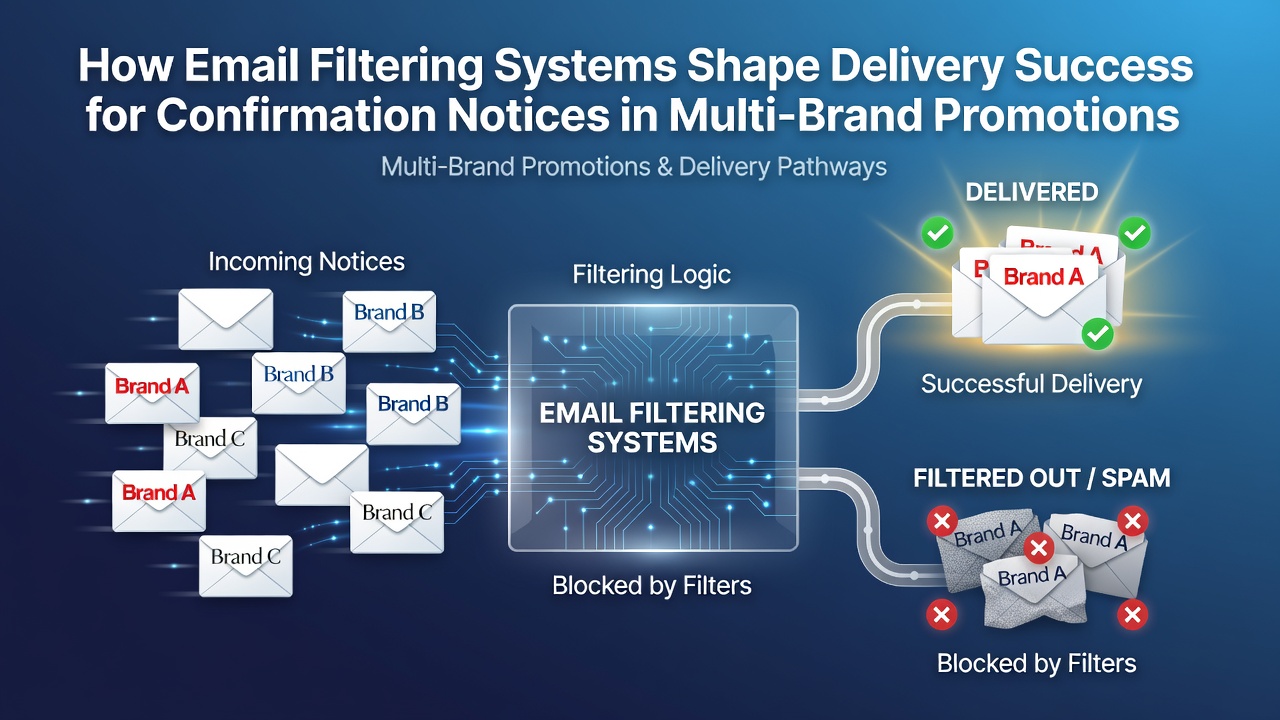
How Email Filtering Systems Shape Delivery Success for Confirmation Notices in Multi-Brand Promotions
Multi-brand promotions rely on confirmation notices to verify participant entries and maintain operational transparency, yet email filtering systems determine whether those messages reach intended inboxes or land in spam folders instead. Major providers deploy algorithms that evaluate sender reputation, message content, authentication protocols, and recipient engagement patterns before deciding delivery outcomes, and these decisions directly influence how effectively promotion organizers communicate with entrants across various campaigns.
Core Components of Modern Email Filtering
Filtering systems analyze multiple signals simultaneously, including domain authentication records like SPF, DKIM, and DMARC, while also scanning for keywords commonly associated with promotional material, and they track complaint rates from previous deliveries. Research from the Messaging, Malware and Mobile Anti-Abuse Working Group indicates that messages lacking proper authentication experience higher filtering rates, particularly when sent in bulk volumes typical of coordinated brand partnerships. Observers note that content scoring models assign lower priority to messages containing phrases such as "free entry" or "claim your reward," which appear frequently in confirmation notices for multi-brand events.
Recipient behavior further shapes filter outcomes because repeated non-opens or direct deletions train algorithms to deprioritize similar future messages from the same sender domain. Data compiled by industry monitoring services shows that domains maintaining consistent engagement metrics above 30 percent open rates achieve measurably better inbox placement across major providers.
Delivery Challenges Specific to Multi-Brand Confirmations
Confirmation notices for promotions involving several brands often combine elements from multiple sender domains within a single campaign thread, which creates additional scrutiny points for filters. When one partner domain carries a weaker reputation score, the entire message chain risks reduced visibility even if other participating brands maintain strong records. Studies conducted by academic researchers at institutions tracking digital marketing infrastructure reveal that cross-brand coordination increases the likelihood of partial delivery failures, where some recipients receive notices while others do not.
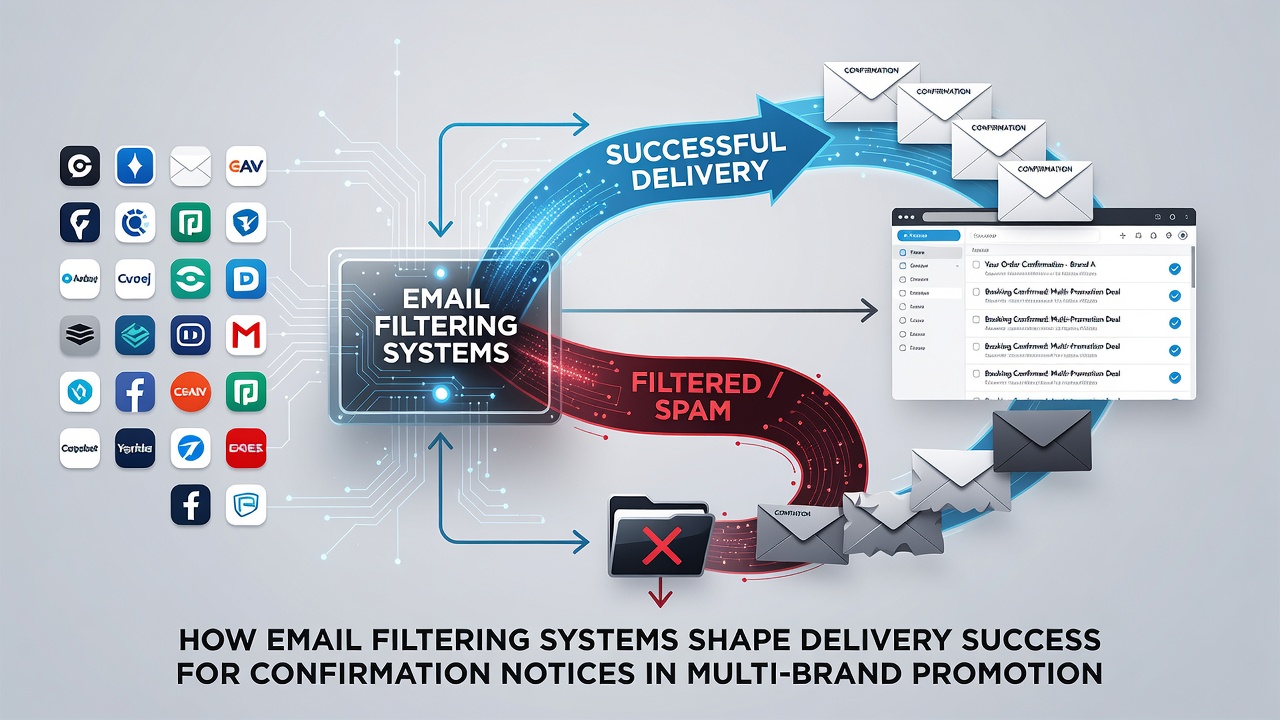
Volume spikes during peak promotion periods compound these issues because filters interpret sudden increases in outbound messages as potential spam campaigns. In August 2026, several major email providers adjusted their threshold models for seasonal volume patterns, resulting in temporary delivery rate fluctuations for coordinated multi-brand notifications sent during that window according to reports from network operations centers.
Authentication Standards and Their Role
Organizations running multi-brand promotions implement layered authentication to improve passage through filters, and those who align all partner domains under unified DMARC policies report fewer bounces and blocks. Technical documentation from the Internet Engineering Task Force outlines how these protocols establish sender legitimacy, yet implementation gaps between brands frequently undermine collective efforts. Figures from email service providers indicate that campaigns achieving full DMARC alignment across partners experience up to 15 percent higher inbox delivery compared with partially aligned efforts.
Regulatory Frameworks Influencing Practices
Rules such as the CAN-SPAM Act in the United States and equivalent directives in other regions establish baseline requirements for commercial messages, including accurate subject lines and functional unsubscribe mechanisms, and compliance with these standards reduces the probability of automated filtering triggers. A report issued by the Australian Competition and Consumer Commission highlights how adherence to local anti-spam provisions correlates with improved delivery performance for cross-brand promotional communications. Observers note that non-compliant notices face compounded risks when filters incorporate regulatory violation signals into their scoring systems.
Measurement and Adjustment Approaches
Promotion operators monitor delivery metrics through seed list testing and engagement analytics to identify filter-induced losses early, then adjust sending schedules, content phrasing, or partner domain configurations accordingly. Data from email platform dashboards shows that iterative refinements based on these measurements can stabilize delivery rates within two to three campaign cycles for multi-brand initiatives. Those managing such programs often coordinate with deliverability specialists who analyze filter feedback loops and recommend protocol updates.
Conclusion
Email filtering systems continue to evolve in response to changing threat landscapes and user behavior data, directly affecting the success rate of confirmation notices distributed through multi-brand promotion channels. Effective navigation of these systems requires coordinated authentication practices, compliance with regional regulations, and ongoing measurement of delivery performance across all participating domains. As providers refine their algorithms, organizers who maintain technical alignment and monitor engagement signals position their notices for consistent inbox placement.